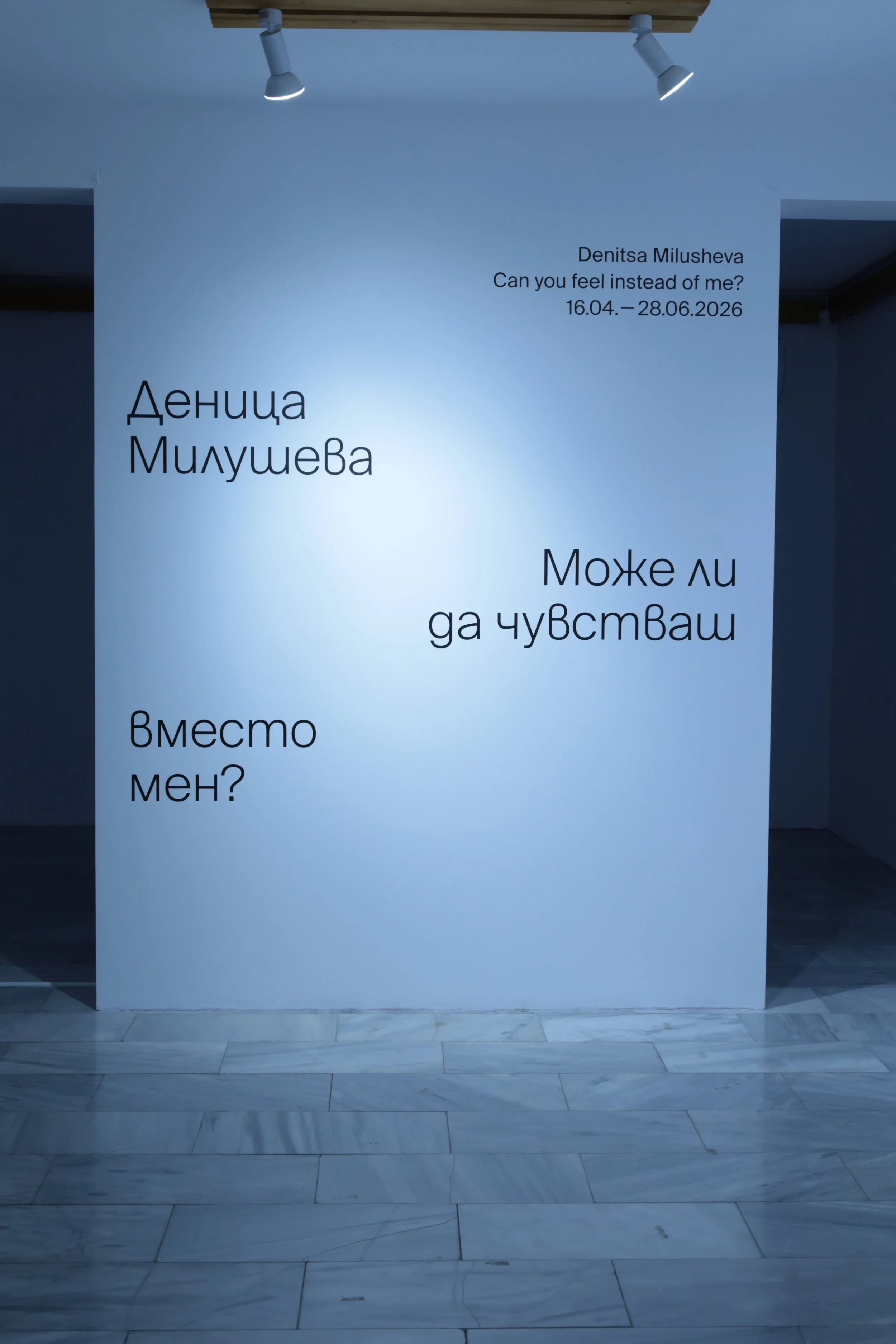
Can you feel instead of me? 2026
Exhibition by Denitsa Milusheva
Dechko Uzunov House Museum
16.4.2026 — 28.6.2026
Curator - Galina Dimitrova-Dimova / Curator - AGK - Lyuben Malchev / Designer - Georgi Sharov / Additional translation - Joanna Bradshaw / Technical assistant - Kiril Georgiev
The exhibition by Denitsa Milusheva at the Dechko Uzunov House Museum, part of the Art Gallery in Kazanlak, addresses the theme of presence and experience in the contemporary world, in which a significant portion of our lives unfolds online.
In the mid-1990s, when internet art, known as net.art, emerged, it revived one of the key slogans of earlier avant-gardes: the dissolution of the boundary between art and everyday life. Described by Alexei Shulgin, one of the pioneers of net.art, as “ultimate modernism,” it perhaps comes closest to fulfilling this ideal of 20th-century avant-garde art.
The development of technologies and communications keeping us connected 24/7 has achieved what many people in the past dreamed of – being able to reach virtually anyone, anywhere on the planet. The 21st century brought the boom of social media and a form of online life that often feels more consuming than real life. Everything must be shown and shared; otherwise, it is as if it never happened.
What does this migration of our lives and feelings into the digital sphere actually bring us? Does the constant reporting of our experiences on social media provide the sense of closeness, sharing and support that we need?
These are the questions Denitsa Milusheva raises in her current exhibition, which includes one new and two earlier works, each offering different perspectives on the theme.
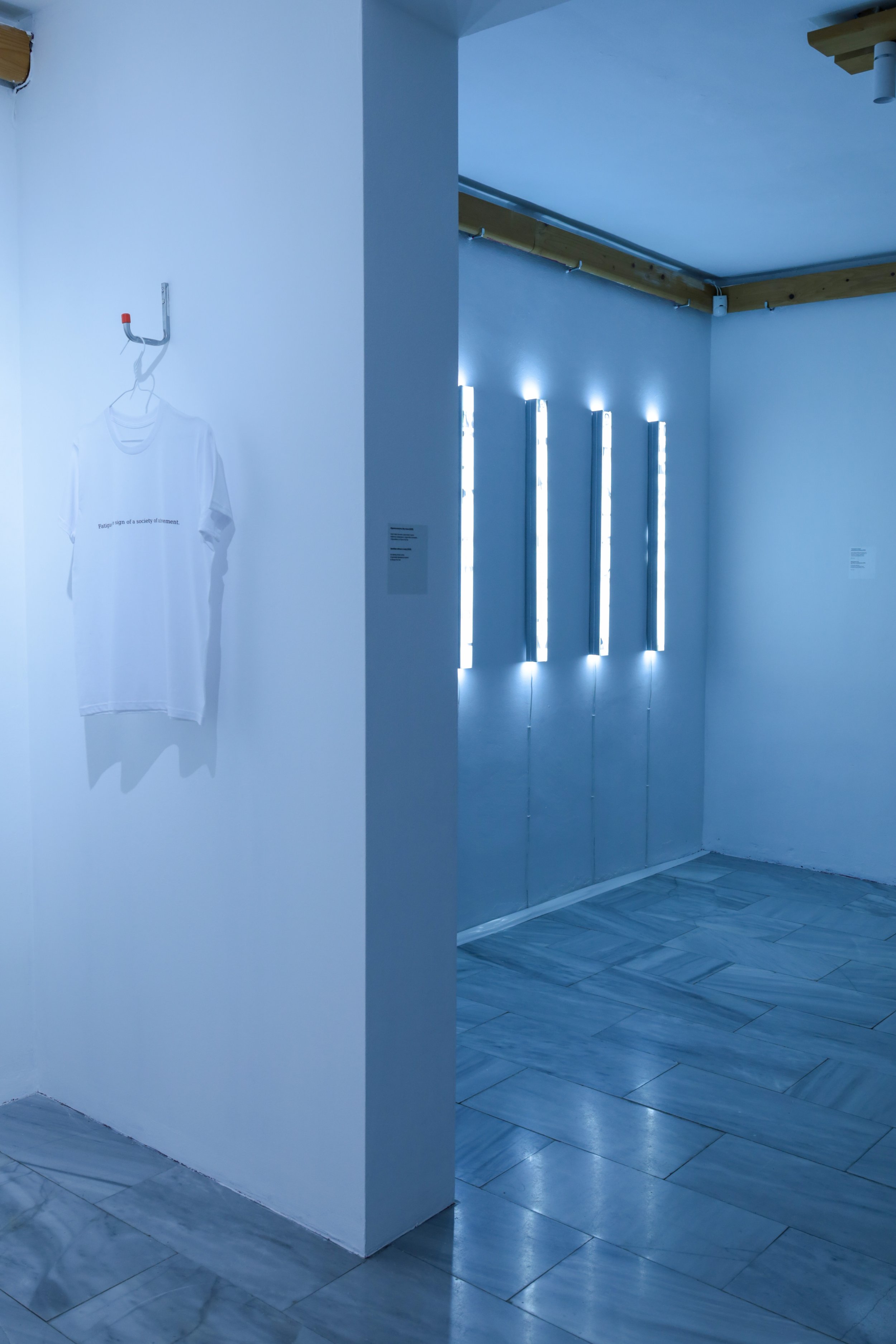
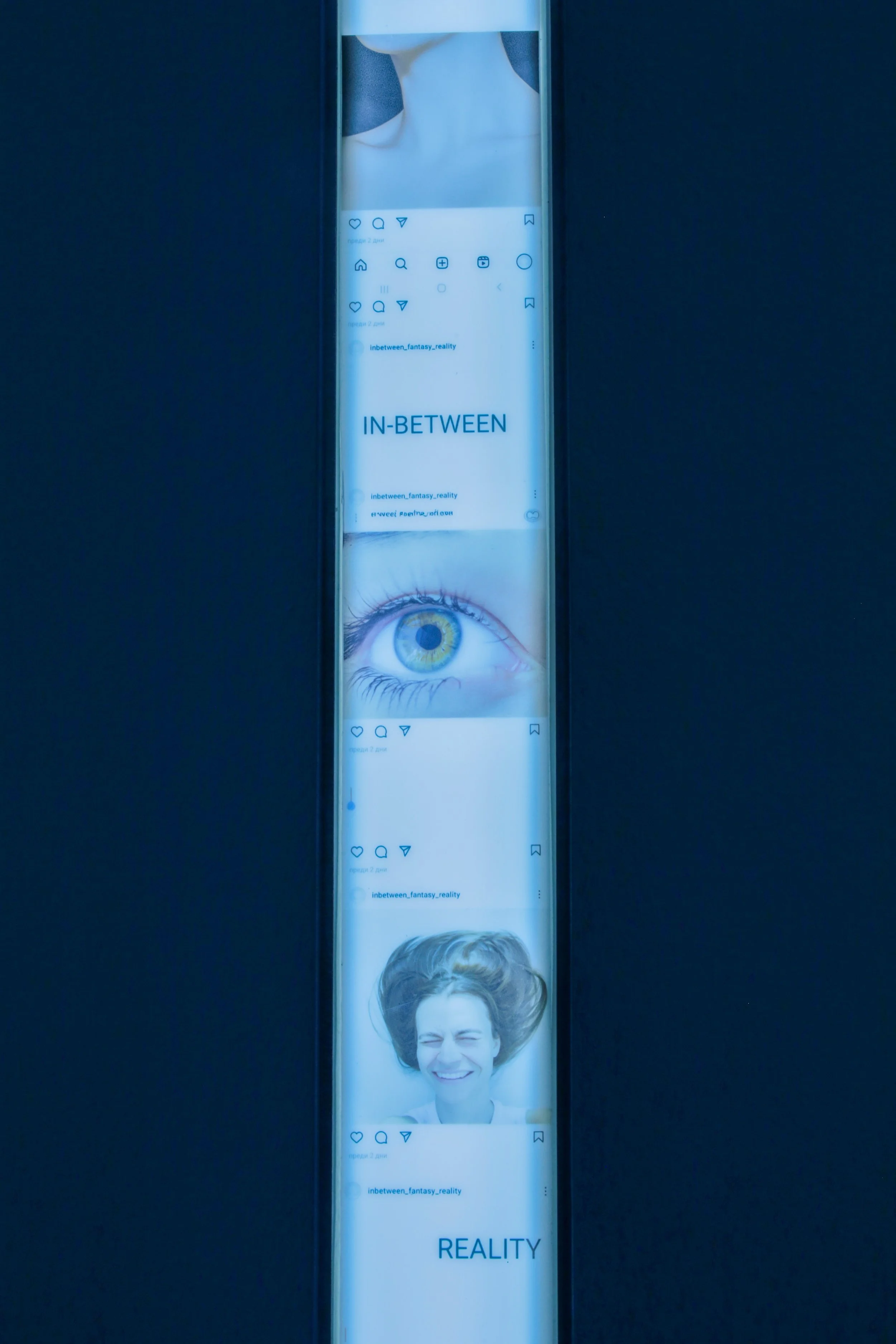
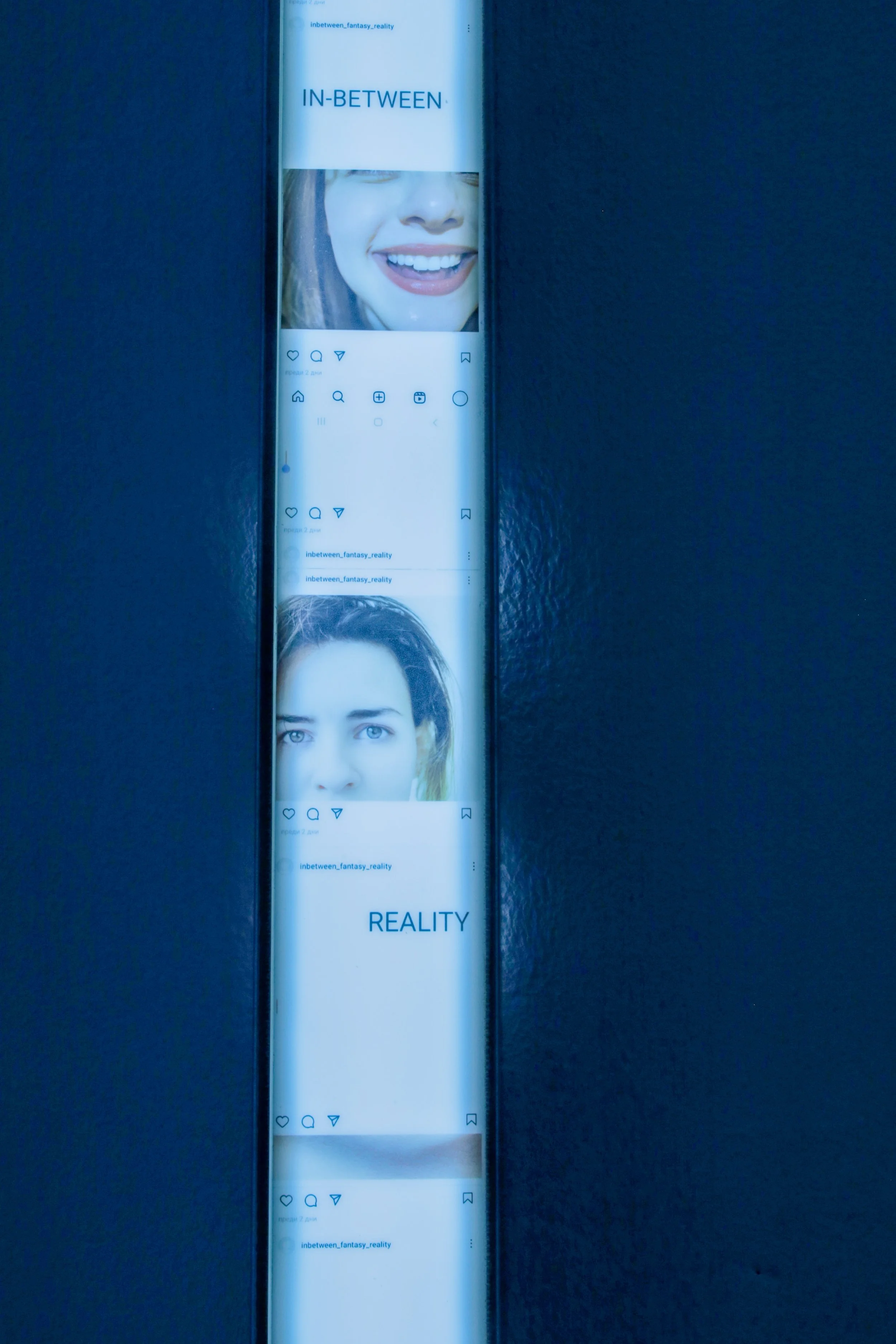
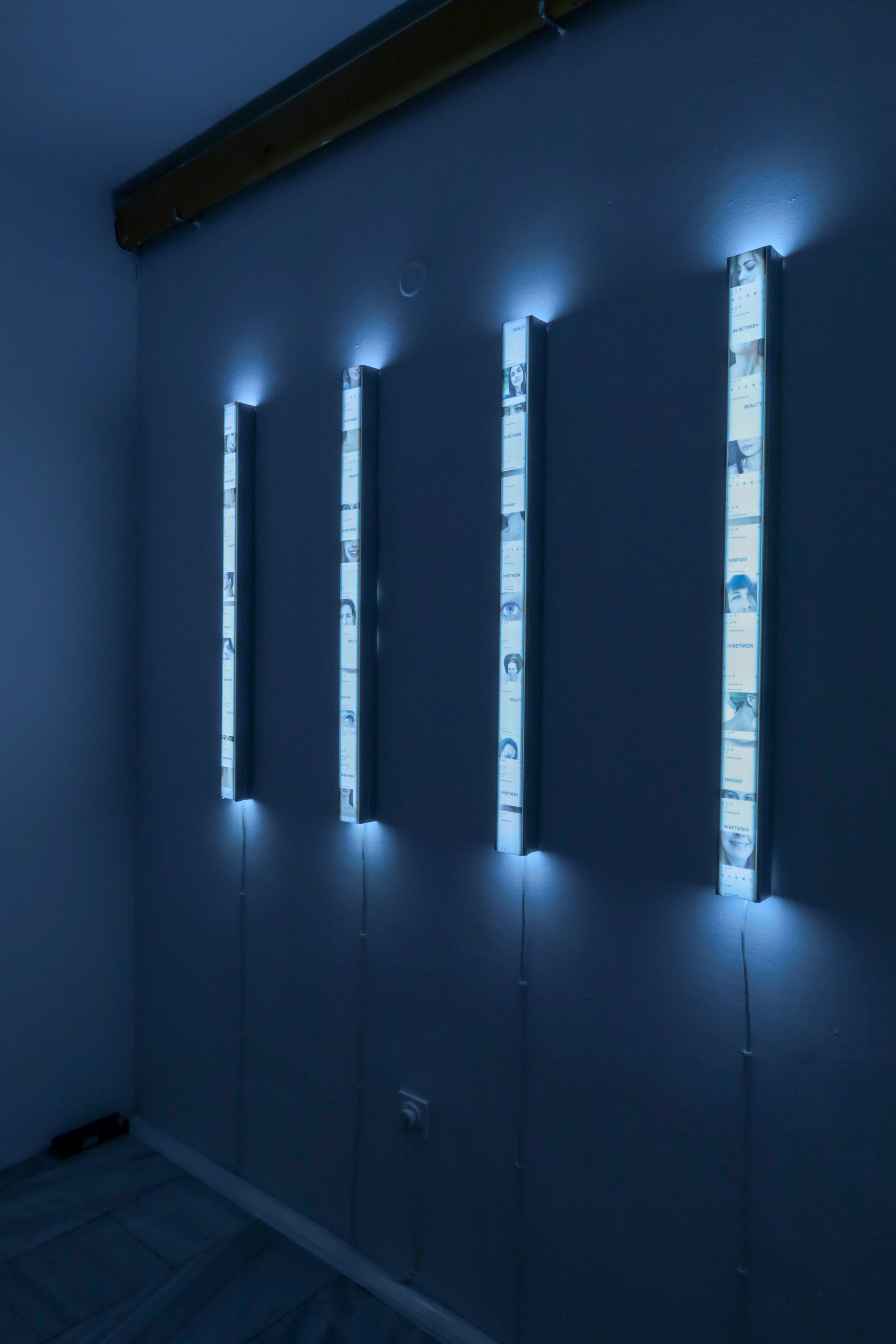
Performance of an algorithmic consciousness is a series of five illuminated panels presenting fragments from a fictional Instagram profile, inbetween_fantasy_reality. Many of the images and texts are generated with the help of artificial intelligence, following the artist’s prompts and based on her own photographs used as source material. The content revolves around keywords such as vulnerability, intimacy and melancholy. Here, the artist searches for a sense of closeness and the experience of something that does not truly exist, yet feels strikingly real. Can we connect to the life of the character presented there, and is there anything preventing us from sharing their emotions?
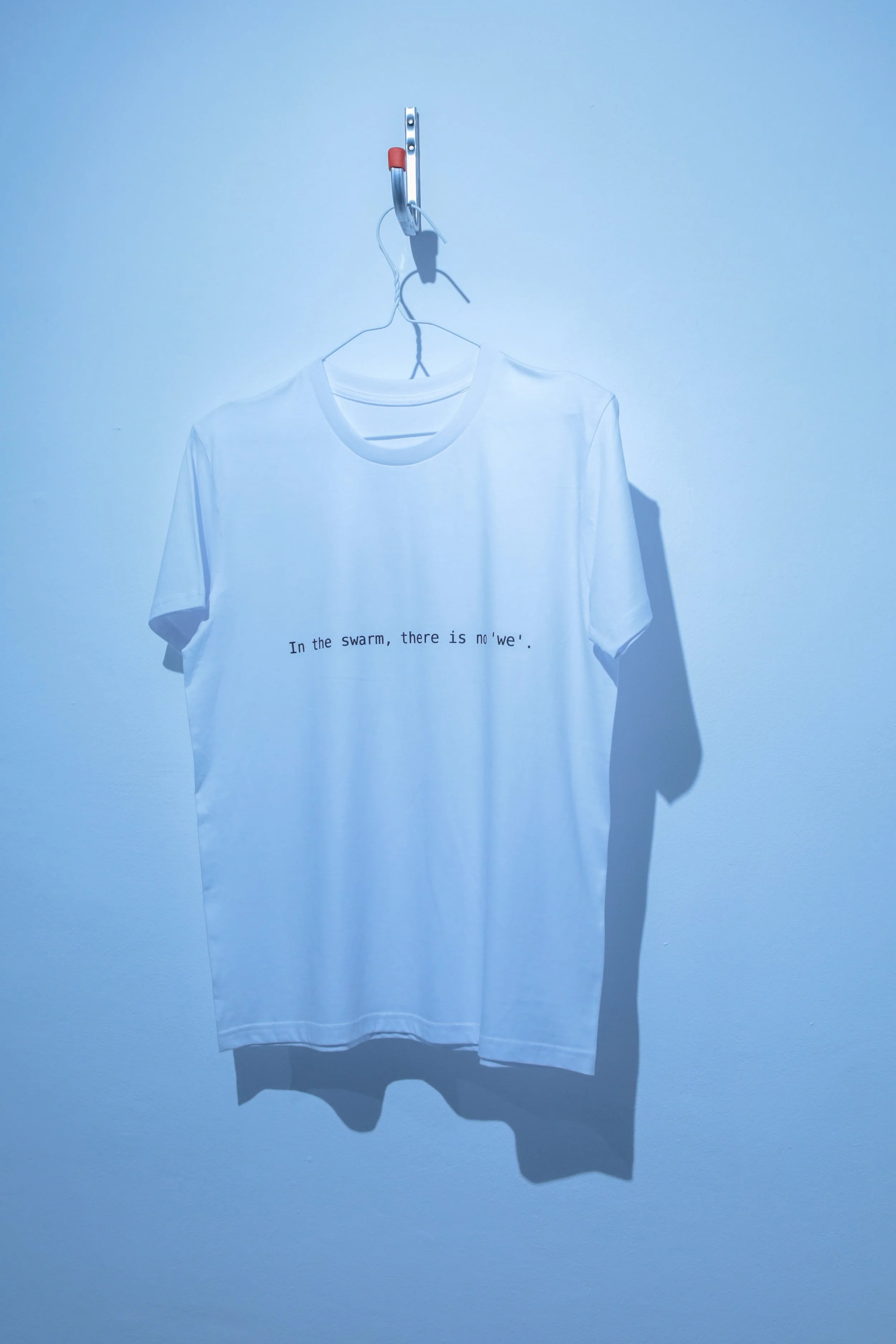
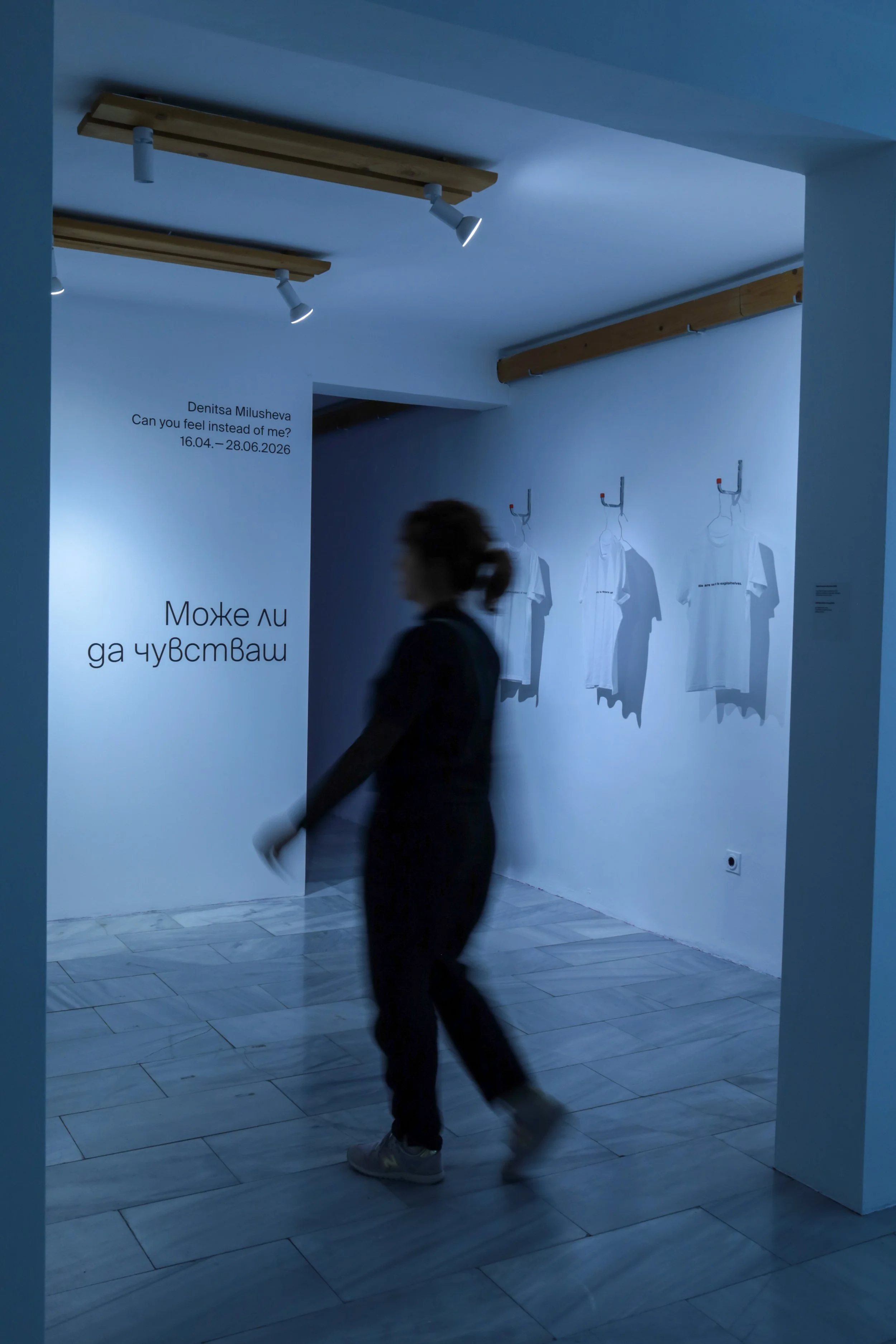
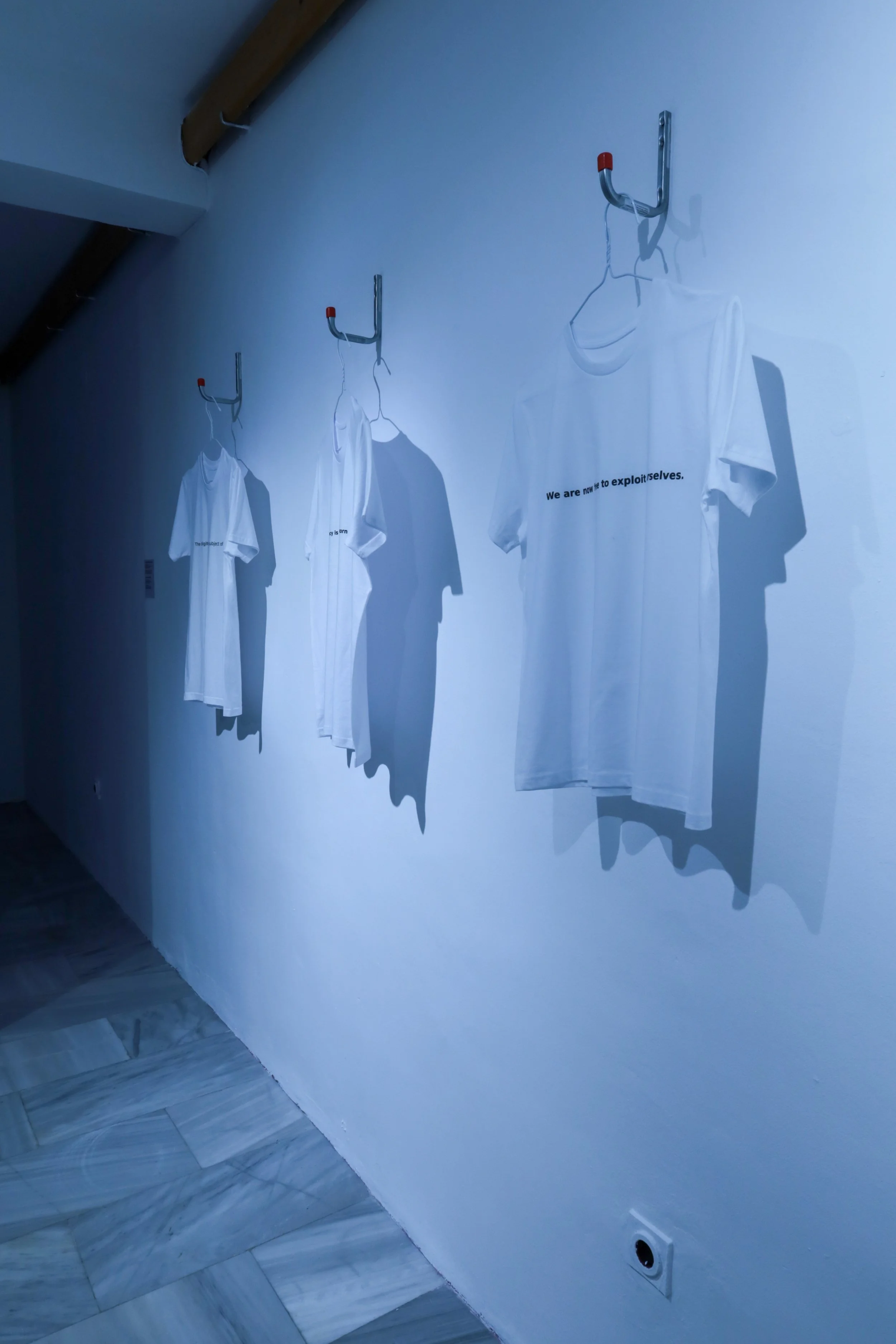
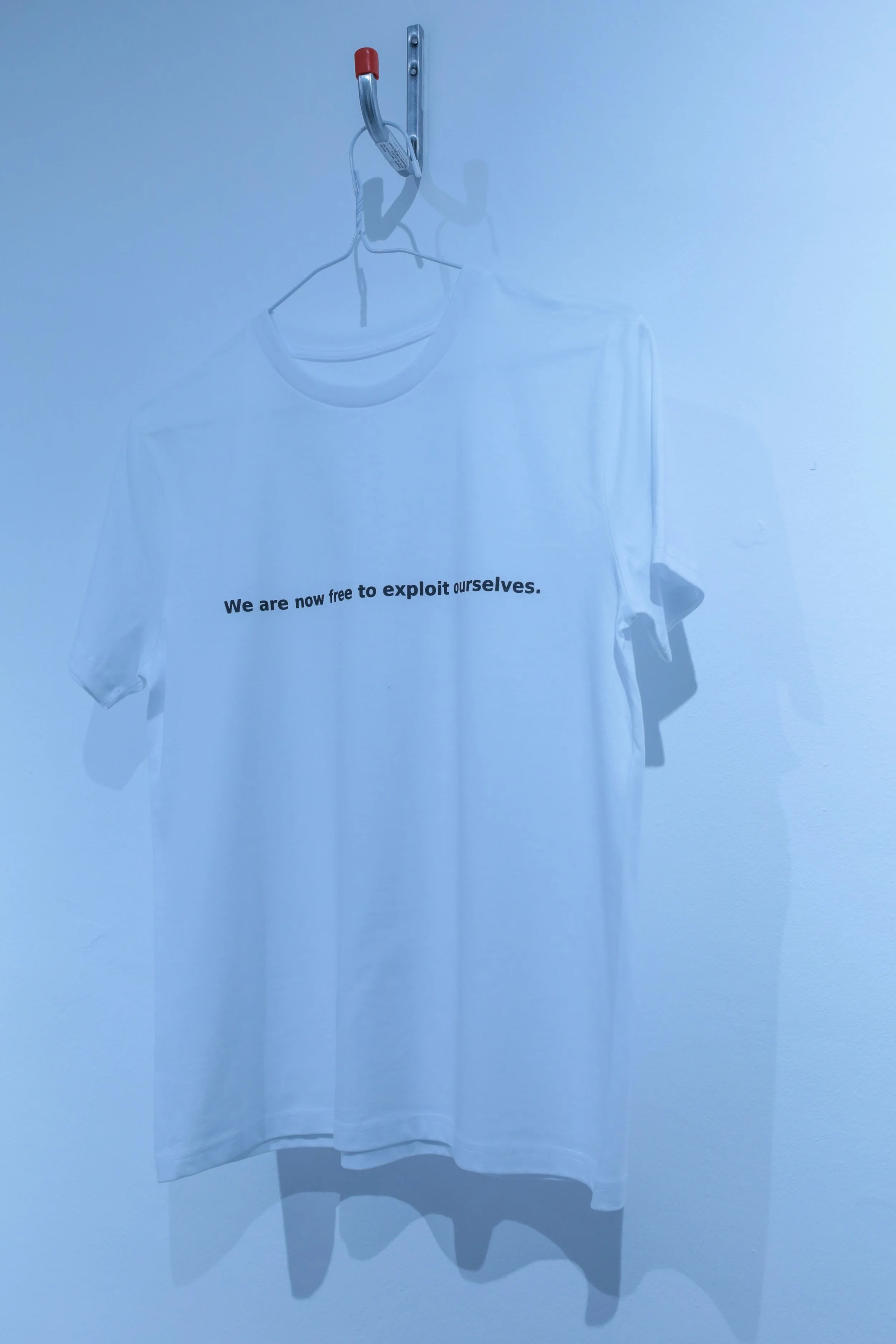
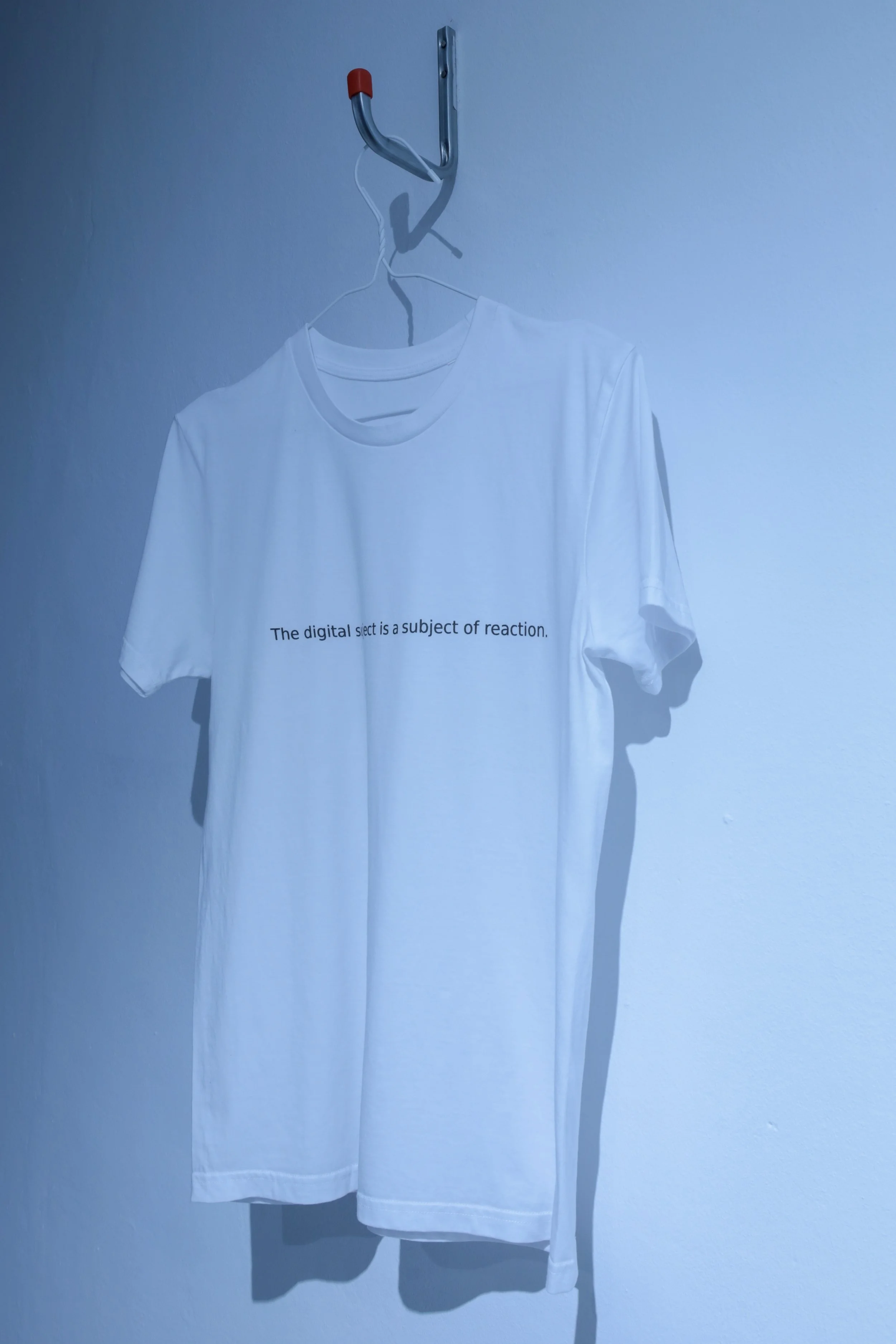
The second series, Identities without a body, invites us to reflect on slogans that shape behavioural models in the contemporary world. White T-shirts display AI-generated phrases drawn from the works of Byung-Chul Han, such as: ‘Everything must be visible – even the soul’ and ‘In the swarm there is no “we”.’ According to the artist, ‘they represent this sense of obligation to remain constantly “visible” and to curate and display every experience on social media.’
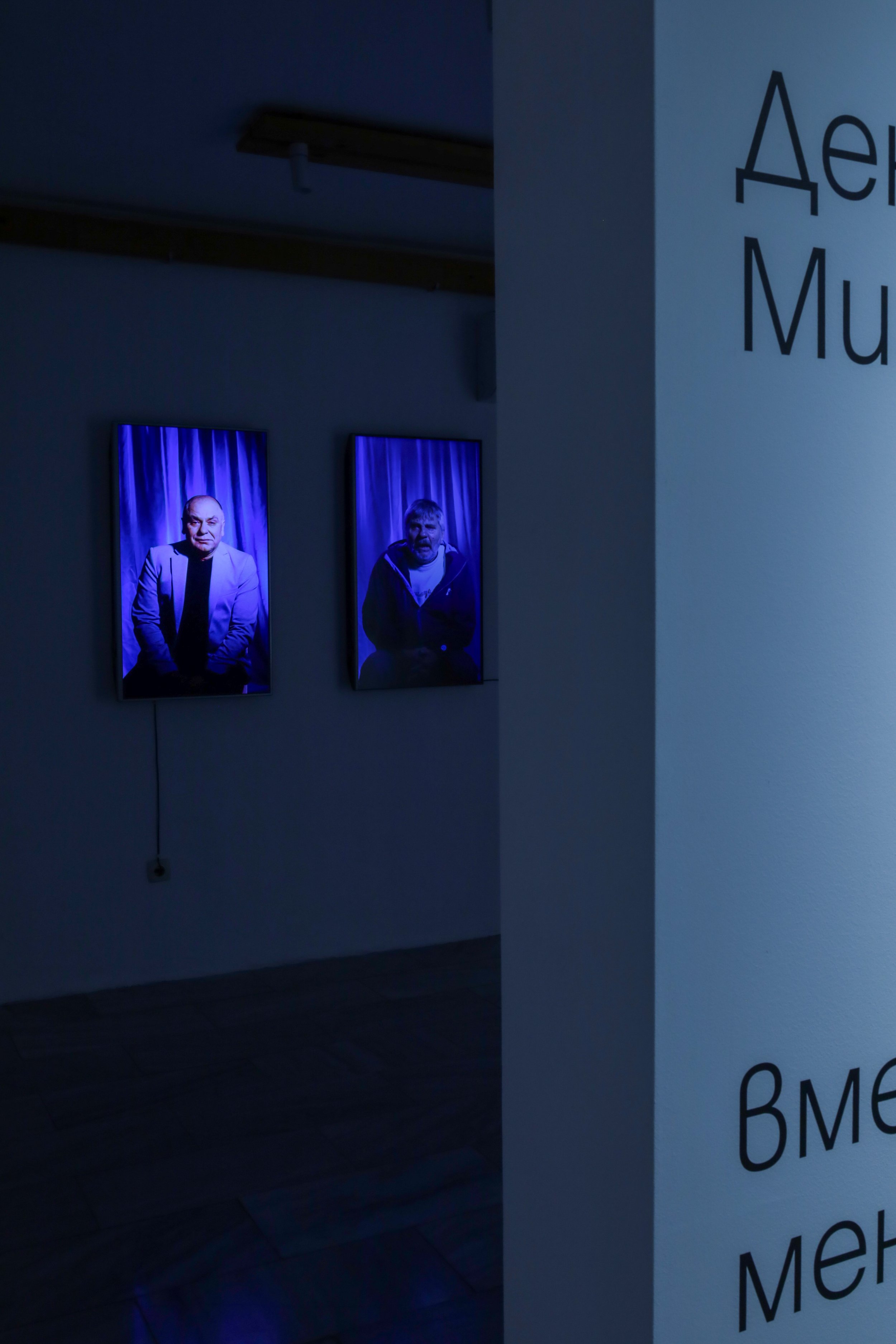
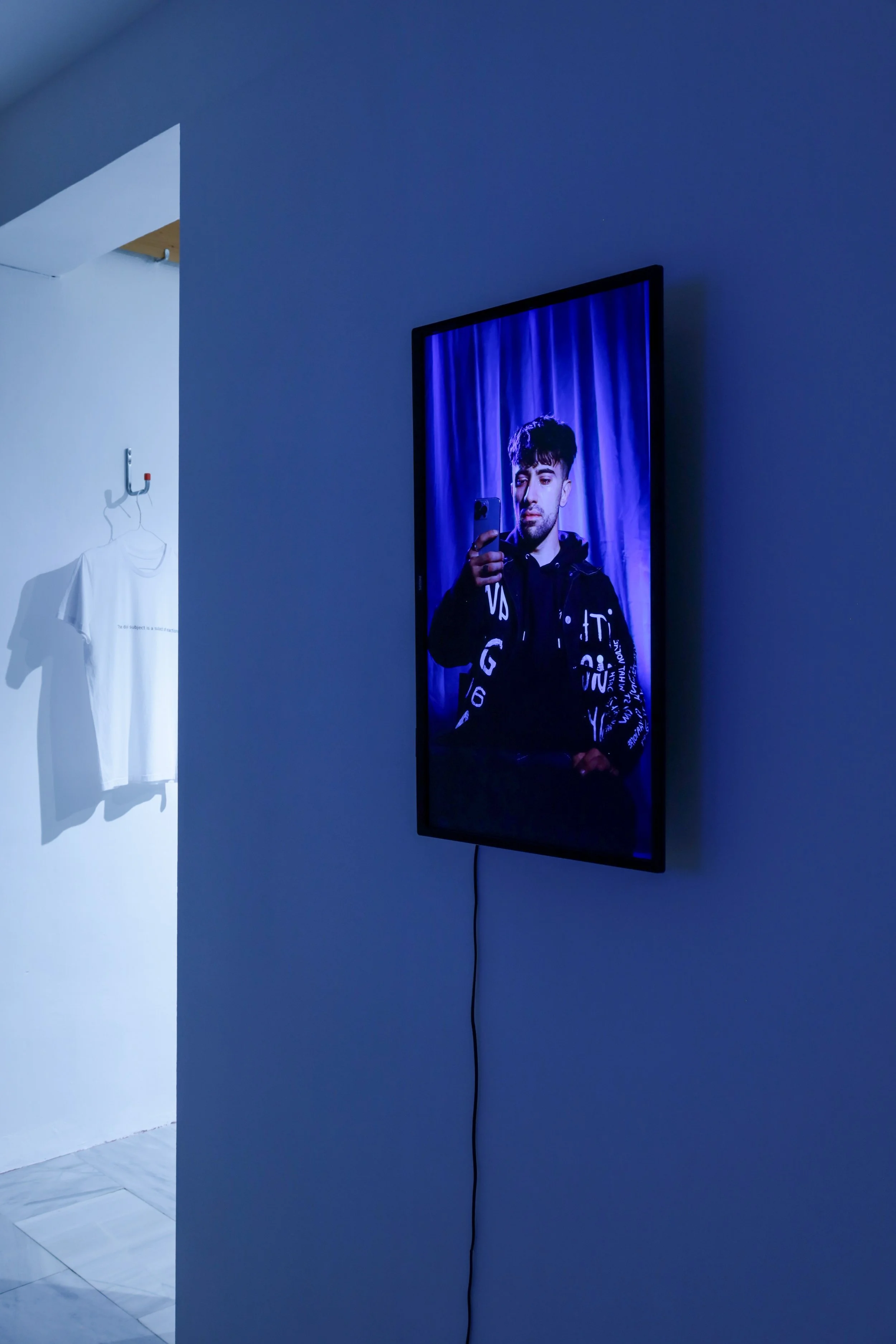
The new work, created especially for the exhibition, is a three-channel video installation. Can you feel instead of me? presents three actors documenting themselves for social media while crying inconsolably. The piece references the video I’m Too Sad to Tell You by the legendary artist Bas Jan Ader. Often described as a representative of romantic conceptualism, he was among the pioneers who introduced direct personal emotion into artworks. If this was revolutionary in the art of the 1970s, Milusheva’s work comments on the contemporary phenomenon of sharing videos in which people display their emotions during difficult moments in their lives. The piece raises the question: can we transfer our feelings into the network and allow others to co-experience them?
For better or worse, everything is now online, and it is hard to imagine life without an internet connection. The growing integration of AI-driven applications into both our work and daily lives brings a new mix of excitement and anxiety. What the new algorithms of presence will be remains to be seen.
Galina Dimitrova - Dimova